72-Hour Kit Checklist: Build a Go Bag You'd Actually Grab (Free Printable, 2026)
Last reviewed: May 2026
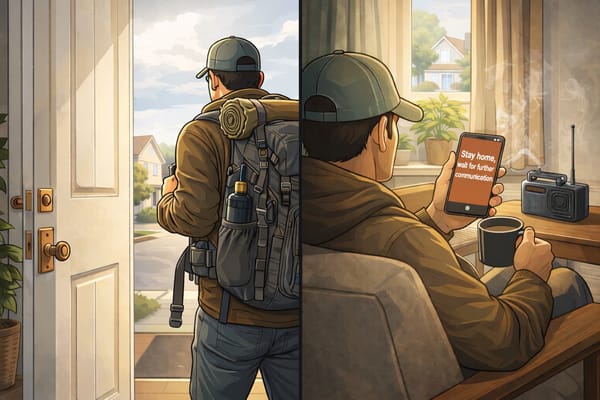
Most people who evacuate don't do it because society collapsed. They do it because a wildfire moved faster than expected, a hurricane was coming, or a flood warning came out at 2 a.m. A 72-hour kit is everything one person needs for the first three days after they leave home: water, food, shelter, light, comms, meds, docs.
Download the printable 72-hour kit checklist PDF (free, no email required) ->
Building this kit takes about 2 hours of shopping and 30 minutes of packing. You probably own half the stuff already.
What a 72-Hour Kit Is (and Isn't)
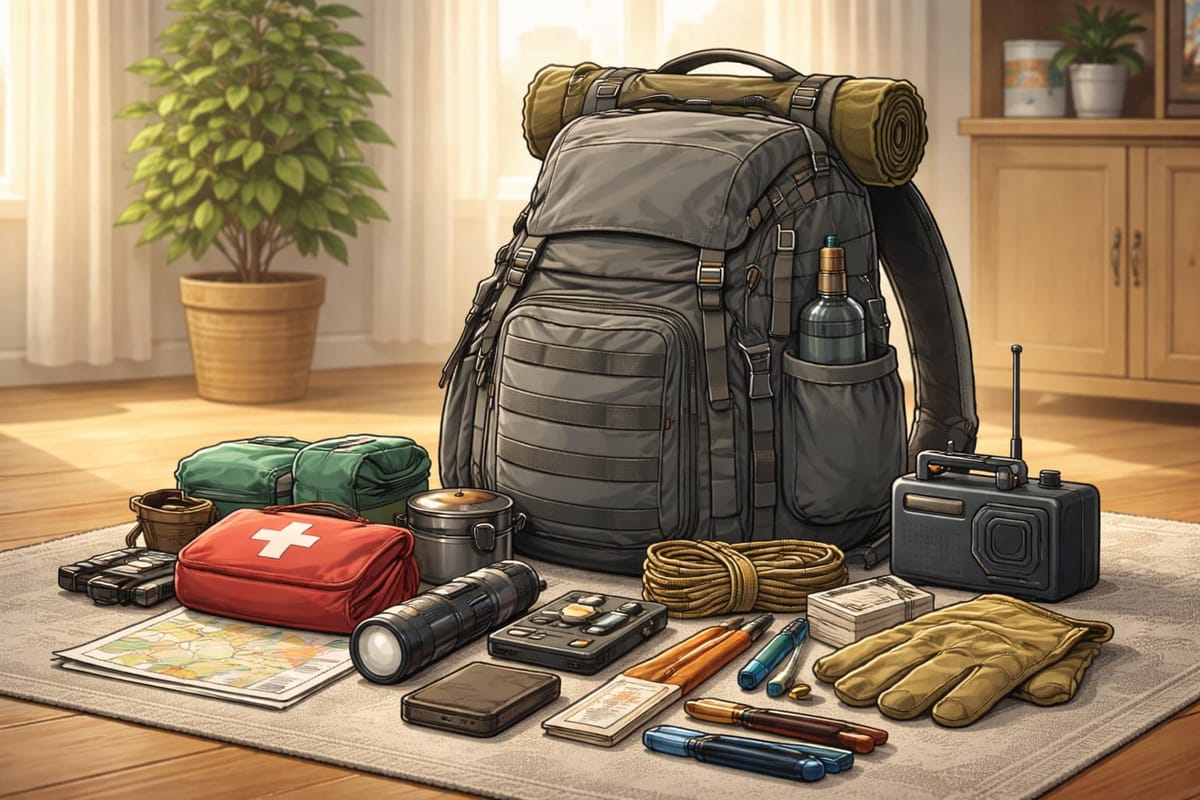
A 72-hour kit, also called a go bag, is a packed bag staged at home for short-notice evacuations. Three days. One bag per person. FEMA and Ready.gov both recommend at least 72 hours of supplies as a baseline after a disaster.
Three things it gets confused with:
- Bug-out bag (BOB): A 72-hour kit assumes you're heading to a shelter, hotel, or relative's place -- somewhere with beds and running water within a day or two. A bug-out bag is built for self-sufficient wilderness survival, usually 72 hours to two weeks, and runs considerably heavier. Most people need a go bag, not a bug-out bag.
- EDC (every-day carry): What you carry daily in your pockets. Your EDC supplements your go bag but doesn't replace it.
- Long-term food storage: A separate system for sheltering in place through an extended disruption. This bag is for when you leave, not when you stay.
The 72-Hour Kit Checklist (Quick Version)
Print this, pack against it, rotate it twice a year. The sections below explain the reasoning and where people go wrong.
Water - 3 gallons per person (1 gallon per person per day x 3 days, minimum) - Water filter backup: LifeStraw or Sawyer Squeeze, or iodine/chlorine tablets
Food - 6,000 kcal per person (2,000 kcal/day x 3 days) -- no-cook options only - Energy bars, peanut butter packets, tuna pouches, crackers, dried fruit, electrolyte mix - Manual can opener if anything requires one
Shelter and Warmth - Emergency mylar blanket -- 1 per person - Rain poncho -- 1 per person - 1 complete change of clothes (weather-appropriate) plus 2 extra pairs of socks - Sturdy closed-toe shoes - Work gloves (1 pair)
Light, Power and Comms - Headlamp with 4 spare AA batteries per person (or hand-crank model) - NOAA weather radio -- hand-crank or battery - Power bank (10,000+ mAh, pre-charged) with charging cable - Paper list of 10 emergency contacts with phone numbers - Whistle
First Aid and Medications - Standard kit: bandages (assorted), gauze (2x2 and 4x4), medical tape, antiseptic wipes, antibiotic ointment, OTC pain reliever, antihistamine, nitrile gloves (3 pairs), scissors, tweezers - 7-day supply of all personal prescription medications in original packaging - OTC backup: ibuprofen or acetaminophen, antihistamine, antidiarrheal - Backup glasses or contacts plus lens solution - Copies of prescriptions
Hygiene and Sanitation - Wet wipes -- 30-40 per person in a resealable bag - Hand sanitizer (2 oz minimum) - Toothbrush plus travel toothpaste - Period products if applicable - N95 masks -- 2-3 per person - 2 heavy-duty 30-gallon contractor bags plus zip ties
Documents and Cash - Waterproof pouch with copies of: IDs, passports, insurance cards, medical records, vaccination records - $100-$200 in small bills ($1, $5, $10) - Out-of-state emergency contact with phone number and address
Tools - Multi-tool (Leatherman or similar) - Duct tape (small roll) - Paracord (25 feet) - Lighter plus waterproof matches - Folded local map
Kids, Pets and Special Needs -- see dedicated sections below
Water: 1 Gallon Per Person Per Day
The math is simple: 1 gallon per person per day. Three days. That's 3 gallons per person minimum, covering drinking and basic hygiene. Add a buffer for hot weather, kids, or hard physical exertion.
Three gallons per person weighs about 25 lbs. That's why most bags carry water bottles or flat emergency pouches for drinking, plus purification backup rather than full jugs. A LifeStraw or Sawyer Squeeze filter handles bacteria and protozoa from freshwater sources. Iodine or chlorine tablets purify collected water you can't boil. Carry both if your route involves any uncertainty about water access. The CDC covers the options in detail.
Container tip: sealed 1-liter emergency water pouches have a 5-year shelf life and pack flat. Standard water bottles work fine with regular rotation. Avoid milk jugs -- the plastic degrades and the seals fail.
Rotation: swap stored water every 6 months. Daylight Saving Time weekends are the trigger most people can actually remember -- same time you change smoke alarm batteries.
Food: 2,000 kcal Per Person Per Day, No-Cook Default
Assume no cooking. You might reach a shelter with facilities. You might not. The food needs to work either way.
2,000 kcal per person per day across 3 days means roughly 6,000 kcal per person. Here's what that looks like:
- 2 CLIF bars: ~500 kcal
- 1 small peanut butter jar (16 oz): ~2,700 kcal
- 1 tuna pouch: ~100 kcal plus solid protein
- 1 bag trail mix (6 oz): ~800 kcal
A realistic 3-day food pack: 4 energy bars, 1 small peanut butter jar, 4 tuna pouches, crackers, a handful of single-serve nut packets, 2-3 electrolyte stick packets. That's under 2 lbs and under $20.
Allergen note: if anyone in your household has dietary restrictions, pack their food separately, labeled, in a visible spot.
Rotation: put masking tape on the bag with the expiration date of the earliest item. When it approaches, replace it. The same FIFO (first in, first out) principle that applies to your at-home pantry applies here.
Shelter and Warmth
An emergency mylar blanket weighs next to nothing and packs to the size of a deck of cards. It reflects 90% of body heat. Everyone gets one.
Rain poncho: a basic poncho weighs three ounces and stuffs into a pocket. It covers you if you have to move through rain, which happens. A waterproof jacket is better if you have the bag space.
Clothes: one full change -- socks, underwear, pants, a long-sleeve shirt. Pack what you'd want to sleep in at a shelter. Closed-toe shoes, not flip-flops. For cold climates, add a beanie and light fleece. Two extra pairs of socks on top of your change of clothes is not overkill -- wet feet compound every other problem.
Work gloves: more useful than people expect. Debris, broken glass, moving things quickly through chaos.
Pack ceiling: keep the whole kit under 20% of the carrier's body weight. For a 150-lb adult, that's 30 lbs maximum. For kids and elderly family members, aim for 10-15 lbs. A bag too heavy to run with defeats the purpose.
Light, Power and Comms
Headlamp over handheld flashlight: both hands stay free. Stock Energizer or Duracell AAs -- they hold charge longer in storage than generics. Keep 4 spare batteries per headlamp, stored outside the device to prevent corrosion.
The NOAA Weather Radio is the one item that works when cell networks don't. A hand-crank or battery radio receives NOAA Weather Radio All Hazards broadcasts: federal emergency alerts, evacuation orders, shelter locations. Cell coverage gets overloaded or goes down during declared disasters. A radio doesn't. Write your county's NOAA frequencies on the device in permanent marker.
Power bank: 10,000+ mAh, enough to charge a modern smartphone twice. Keep it charged and add it to the DST rotation check.
The paper contact list is the thing people skip and regret. Write down 10 numbers: family members, your doctor, your insurance claims line, and an out-of-state relative who can coordinate if local lines are jammed. A phone with a dead battery or no signal is useless without this backup.
First Aid and Personal Meds
A functional kit covers: assorted bandages, 2x2 and 4x4 gauze pads, medical tape, antiseptic wipes, antibiotic ointment, OTC pain reliever, antihistamine, nitrile gloves (3 pairs), scissors, tweezers.
What most kits skip: personal prescription medications. You need a 7-day buffer, not just 3 days. For maintenance medications, ask your pharmacist about emergency supplies -- many states have provisions for this. Keep meds in original packaging with the pharmacy label intact.
Backup glasses or contacts: if you need them to drive or function, a spare pair in the kit is non-negotiable. Contacts wearers, add a small bottle of solution and cases.
The American Red Cross recommends keeping a written list of medications, dosages, and prescribing physicians in the kit, waterproofed.
General preparedness information, not medical advice. For managing specific health conditions during emergencies, consult your doctor.
Hygiene and Sanitation
Three days without a shower is inconvenient. Three days without any sanitation is a health risk in a crowded shelter.
Wet wipes cover a lot: body wipe-downs, hand cleaning before eating, surface sanitizing, diaper changes. Pack 30-40 per person in a resealable bag.
N95 masks: wildfire smoke, earthquake dust, respiratory illness in shared shelter spaces. Two to three per person. They've always been a smart pack item.
30-gallon contractor bags with zip ties: pack two. Emergency waste containment is the practical use that never gets mentioned. They also work as rain covers for your pack, waterproofing for electronics, and improvised shelter material. They weigh almost nothing.
CDC guidance on emergency hygiene: hand sanitizer first, soap and water when you have access.
Documents and Cash
This is the section most people skip until they've evacuated and realized they have nothing to prove who they are.
Get a waterproof zip pouch. Inside: copies of passports, driver's licenses, health insurance cards, vehicle registration, home insurance policy with the claims line number, a page of emergency contacts with addresses, and pet vaccination records if your local shelters require them.
$100-$200 in cash, small bills. ATMs and card readers go down in declared disasters. Cash pays for gas at a cash-only pump, food from a roadside vendor, or a motel room when the payment terminal is out.
Out-of-state contact: one person not in your disaster area who can coordinate. Useful because local landlines and cell circuits get overloaded before out-of-state lines do.
Tools
A multi-tool handles most situations requiring tools. Duct tape fixes things. Paracord (25 ft) ties things. A lighter plus waterproof matches gives you two independent fire-starting methods. None of these weigh much; all of them have obvious uses when something goes wrong.
The folded local map is the item people consistently skip because their phone has maps. It also has battery drain, cell-signal dependency, and a screen that breaks. A folded paper map of your county costs nothing at a truck stop and solves all three at once.
Kids, Pets and Special Needs
Kids: Diapers and formula at a 3-day supply for infants. For toddlers and older kids, include one comfort item -- a stuffed animal, a familiar snack, something specifically theirs. Emergencies are frightening for kids and a familiar object matters more than most gear. School-age kids can carry their own light pack: water, snacks, a comfort item. It gives them agency and reduces your load.
Pets: 3-day food and water supply, collapsible bowl, leash, carrier if required by local shelters. Keep vaccination records in the document pouch. Many public evacuation shelters don't accept pets -- know this before you need to, and identify a pet-friendly shelter or accommodation in your area in advance. FEMA's pets-in-emergencies guidance covers this by disaster type.
Elderly or mobility-limited family members: More detailed medication documentation (conditions, dosages, prescribing physicians, pharmacy number), hearing aid batteries, and mobility aid planning. A foldable walker weighs less than a wheelchair. Build the kit around the specific person. FEMA's Access and Functional Needs resources are a useful starting point.
Where to Store It (and How to Test It)
Keep your go bag by the door you'd actually leave through. Not the basement. Not behind the camping gear you haven't touched in three years. The front door, the garage entrance, wherever your keys are.
If you have a car, a lighter "car kit" in the trunk is worth the extra effort: water, food bars, basic first aid, a charging cable, an emergency blanket. The full kit stays at the door. The car kit handles scenarios where you're caught away from home.
Testing twice a year: rotate water and food, check battery levels, verify medications and wipes haven't expired, confirm the bag is where it's supposed to be. Daylight Saving Time weekends are the trigger.
Run one actual drill: pick up the bag and put it in the car. Does it fit? Is it reachable in the dark? Is it too heavy? Does everyone in the household know where it is?
Cost Tiers: DIY vs. Mid vs. Premium
DIY (~$50-$75 per person): Built from Walmart, Target, and the dollar store. Takes more time, costs the least. Most items on this list are under $3 each.
Mid-tier (~$150-$200 per person): Adds a decent headlamp, NOAA radio, quality multi-tool, and proper mylar blankets. Pays for convenience and weight savings.
Premium ($300+ per person): Pre-built kits from established preparedness brands, or quality gear built yourself. Convenient, but read the contents list before buying a pre-built kit -- they often include things you don't need and skip things you do.
No affiliate links. The DIY option covers everything on this list.
What to Skip (Common 72-Hour Kit Mistakes)
Overpacking. Target 20% of the carrier's body weight or less: 30 lbs for a 150-lb adult, 10-15 lbs for kids and anyone with limited mobility. A bag you can't run with is not a go bag.
MRE-only diets. Military MREs are heavy, expensive, and hard on digestion under stress. Use them as a supplement.
Batteries stored in devices. Batteries left in flashlights and radios for months corrode the contacts. Store spare batteries in a small bag beside the device.
No documents. You won't remember where your passport is at 2 a.m. under an evacuation order. You can't check into a hotel without ID.
Flip-flops or dress shoes. You'll be walking through debris, rain, parking lots. Sturdy closed-toe shoes.
No cash. ATMs fail. Card readers fail.
Print This Checklist
Download the 72-hour kit checklist PDF (free, no email required -- available soon) -- one page, front and back, with checkboxes and a quantity column.
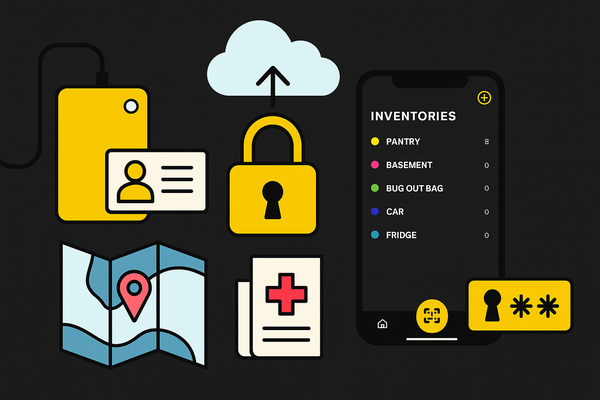
The Apocalists app (free on iOS and Android) lets you scan barcodes, log expiration dates, and get notified before food expires -- useful for tracking kit rotation alongside your home pantry.
Long-term food storage for staying home through a longer disruption is a different system -- one for a future post.
FAQ
What should be in a 72-hour kit? Water (1 gallon per person per day = 3 gallons per person for 72 hours), food (2,000 kcal per person per day, no-cook), a first-aid kit, a 7-day supply of personal medications, a headlamp, a NOAA weather radio, documents and cash in a waterproof pouch, an emergency blanket, and hygiene basics. The full checklist is above.
How much water do you need for 72 hours? 1 gallon per person per day, so 3 gallons per person for 72 hours. For a family of four, that's 12 gallons. If you're evacuating on foot, carry what you can (minimum 1 liter per person) and add a water filter or purification tablets to source water along the way.
What's the difference between a go bag and a bug-out bag? A go bag is for short-term displacement to a shelter, hotel, or relative's house -- you expect to be back within a few days. A bug-out bag assumes longer displacement and possible off-grid survival. Most people preparing for real-world emergencies (wildfires, floods, power outages) need a go bag.
How much does a 72-hour kit cost? $50-$75 per person DIY from store-bought items. $150-$200 per person with branded or quality gear. $300+ for pre-built premium kits. The DIY option covers everything.
How heavy should a 72-hour kit be? No more than 20% of the carrier's body weight. For a 150-lb adult, that's 30 lbs. For kids and elderly family members, 10-15 lbs is a better target. A bag too heavy to run with defeats its purpose.
Where should you store a 72-hour kit? By the door you'd actually leave through -- front door or garage entrance. Not the basement. Consider a lighter second kit in your car trunk for commuting scenarios.
How often should you update a 72-hour kit? Every 6 months. Daylight Saving Time in spring and fall is the trigger. Swap food and water approaching expiration, test or replace batteries, verify medications, update documents if anything changed.