Bug-In or Bug-Out? When Should You Actually Leave Your Home?
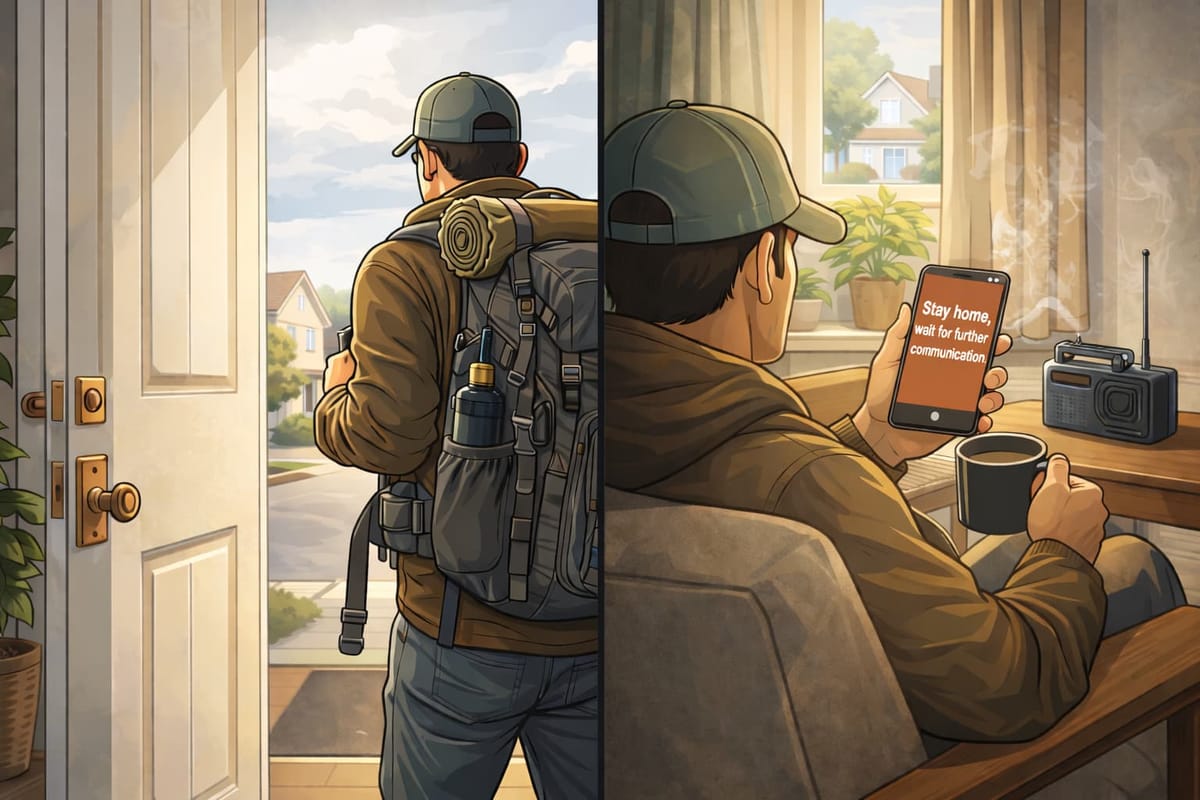
In preparedness circles (most Reddit Prepper forums), few topics generate as much repeated discussion as bugging in versus bugging out. It often turns into a kind of identity question. Are you the person who stays put and rides things out, or the one who grabs a pack and heads for the hills?
Real emergencies do not care about that distinction. They care about timing, location, and whether your current situation is becoming more dangerous or less. When you strip the conversation down to those basics, one conclusion keeps coming up.
For most realistic situations, staying home is the safer choice. Leaving only makes sense when your home stops being safe or you get an official government warning.
Why Staying Home Usually Works
Most people underestimate how much protection and capability already exists inside their own home. Even without calling it preparedness, a house or apartment contains food, water, clothing, tools, shelter from weather, and some level of security. You are not starting from zero. You are starting from a place built to support your daily life and comforts.
That matters because in most disruptions, the biggest risks come from uncertainty and movement. Roads clog, information is incomplete, and small problems pile up fast. Staying home removes many of those variables at once. You are sheltered, you know where things are, and you can make decisions without rushing.
There is also the advantage of familiarity. You know what sounds are normal. You know which streets flood, which neighbors need help, and which routes are best avoided. That local knowledge disappears the moment you leave.
None of this is exciting, but it is effective.
What Bugging Out Really Looks Like
Bugging out is often talked about as if it is simply leaving danger behind. In reality, it usually means trading a known situation for an unknown one. Unless you already have a specific destination that you have been to before, leaving often creates more problems than it solves.
Travel during an emergency is unpredictable. Fuel can be hard to find. Traffic can stop completely. Weather does not cooperate. Even people who are well prepared can find themselves stuck somewhere they did not plan to be, with fewer options than they had at home.
There is also the question of what happens after you arrive. If your plan depends on finding shelter, food, or safety after you leave, it is not really a plan. It is a hope, Unless you are an outdoors person with a lot of wilderness camping experience. But even then, one could argue that if your hunting and trapping game isn't the best, staying in the comfort of a well prepared home is still the better alternative.
This is why experienced preppers tend to repeat the same advice. If you do not already know where you are going and what you will do when you get there, leaving is probably the wrong move.
Most Emergencies Are Not Apocalyptic
A lot of bug-out thinking is driven by worst-case scenarios. Total collapse, permanent grid failure, or instant breakdown of society. Those things make for compelling stories, but they are not what most people actually experience.
Most emergencies are temporary. Power outages, storms, supply shortages, localized unrest. They are uncomfortable, sometimes stressful, but usually measured in days or weeks rather than years.
Tuesday prepping is about getting through those periods without panic. In those situations, staying home almost always puts you in a better position than trying to relocate in the middle of the problem.
When Leaving Makes Sense
There are situations where staying is clearly the wrong choice. These tend to be physical threats that make a location unlivable.
Flooding that continues to rise. Wildfires moving toward populated areas. Structural damage after earthquakes or storms. Chemical spills or evacuation orders where the risk is immediate and well understood.
In those cases, leaving early is often the safest option. Waiting too long can trap you when conditions are at their worst.
The important distinction is that these are not vague fears or general instability. They are specific, observable dangers to your location.
Preparedness Is About Knowing When Not to Move
A solid preparedness mindset is not about choosing bug in or bug out ahead of time. It is about understanding that staying put is the default, and leaving is a response to clear danger.
That means putting most of your effort into making your home more resilient. Food, water, heat, light, and basic medical supplies matter more than a perfect backpack setup. A bug-out plan should exist, but it should be something you hope you never need.
If your home is still standing, still dry, and still breathable, the road is rarely safer than the place you already are. Let others rush out. Let traffic build. Let the situation unfold.
Staying home is not a lack of action. Most of the time, it is the smart one.
If for any reason you do need to evacuate, subscribe to get notified on the upcoming Bug Out Bag post, where we go through the basics and also some more tailored items that should be in a bag for such situations.