How Governments Actually Tell You It’s Time to Leave
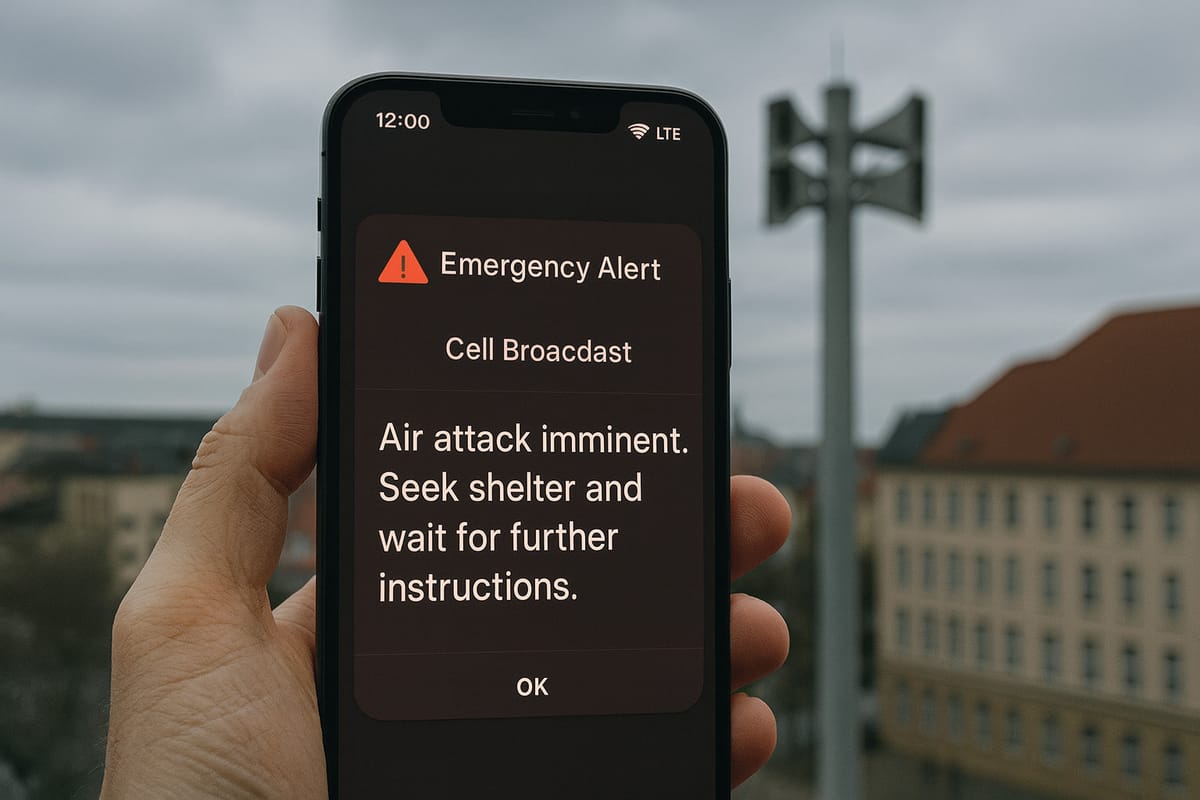
If you are serious about preparedness, one of the most important things you can know is how authorities will tell you that staying put is no longer safe.
Across the world, governments use layered warning systems. These are not theoretical. They are already in place, tested regularly, and used during real evacuations for floods, fires, chemical spills, and other immediate threats.
This section outlines what those signals look like, what they mean, and what to do when you encounter them.
United States
Mobile Alerts
The United States uses Wireless Emergency Alerts (WEA), delivered through FEMA’s Integrated Public Alert and Warning System (IPAWS). These alerts are pushed directly to mobile phones in a specific geographic area and override silent mode.
WEA messages are used for:
- Evacuation orders
- Imminent threats to life
- Extreme weather
- Civil emergencies
Official source:
https://www.fema.gov/emergency-managers/practitioners/integrated-public-alert-warning-system/public/wireless-emergency-alerts
If a WEA message tells you to evacuate, that is a direct instruction to leave.
Sirens
The U.S. does not have a single national siren standard. Most sirens are operated locally and are commonly used for tornado warnings, chemical releases, or other immediate hazards. In short, if you hear a siren, turn on your radio, TV and check your phone for any alert message.
Emergency Radio
The U.S. has a dedicated nationwide emergency radio system: NOAA Weather Radio All Hazards.
Broadcast frequencies:
- 162.400 MHz
- 162.425 MHz
- 162.450 MHz
- 162.475 MHz
- 162.500 MHz
- 162.525 MHz
- 162.550 MHz
These channels carry weather warnings, evacuation notices, and civil emergency messages.
Switzerland
Switzerland has a comprehensive civil warning system, built around redundancy and public familiarity.
Mobile Alerts
Switzerland uses Alertswiss, an official warning system that combines:
- A mobile app
- SMS / push notifications
- Website updates
- Integration with sirens and broadcast media
Alertswiss is operated by the Federal Office for Civil Protection (FOCP) and is used for natural hazards, infrastructure failures, and civil emergencies.
Official source:
https://www.alert.swiss
Sirens
Switzerland maintains a nationwide siren network with clearly defined signals that are taught to the population.
There are two primary siren signals:
General Alarm
- Wailing tone lasting 1 minute
- Signals danger to the population
- Meaning: Turn on the radio or official information channels immediately
Water Alarm
- 12 low tones of 20 seconds each
- Used in areas downstream of dams
- Meaning: Immediate danger, leave the area
These signals are tested annually and are taken very seriously.
Official explanation of siren signals:
https://www.babs.admin.ch/en/alarm-signals
Radio
During alarms, authorities instruct the public to tune into public radio broadcasters, which are required to carry emergency instructions.
Switzerland does not publish a single emergency frequency for the public; instead, national and regional public radio is used as the authoritative source.
What It Means in Practice
In Switzerland, a siren is not informational. It is a command to seek information immediately. If a water alarm is heard, evacuation is expected without delay.
Germany
Germany uses a multi-layered warning system combining mobile alerts, apps, sirens, and broadcast media.
Mobile Alerts
Germany supports Cell Broadcast (DE-Alert) as part of the EU-Alert framework. These alerts appear directly on phones without requiring an app.
Official overview:
https://www.bbk.bund.de
Official Warning Apps
Germany also strongly promotes emergency apps that provide more detailed information:
- NINA (Notfall-Informations- und Nachrichten-App)
Official civil protection app operated by the Federal Office of Civil Protection (BBK)
https://www.bbk.bund.de/DE/Warnung-Vorsorge/Warn-App-NINA/warn-app-nina_node.html - KATWARN
Used by municipalities and emergency services
https://www.katwarn.de
These apps supplement cell broadcast alerts and often provide maps, updates, and instructions.
Sirens
Germany maintains a nationwide civil defense siren network. The only pattern listed by the German federal agency for disaster management and civil defense is the rising and falling tone for 1 minute, which signals multiple hazards.
Sample audio of rising and falling warning sound
https://www.bbk.bund.de/SharedDocs/Audios/DE/Sirenensignale/sirenenton-warnung_audio.html
Official site for the German federal agency for disaster management and civil defense
Radio
There is no single emergency frequency. During alerts, authorities instruct people to tune into public broadcasters and regional radio stations for updates.
Portugal
Portugal combines modern mobile alerts with traditional civil protection systems, particularly focused on wildfires and floods.
Mobile Alerts
Portugal uses cell broadcast–based public warning systems in line with the EU-Alert framework (AvisoPROCIV). Alerts are sent to mobile phones in affected areas during serious emergencies.
Oversight is handled by the Autoridade Nacional de Emergência e Proteção Civil (ANEPC).
Official civil protection authority:
https://prociv.gov.pt/pt/home/
Sirens and Public Warning
Portugal uses local sirens and public address systems, particularly in:
- Flood-prone areas
- Coastal zones
- Areas near dams
- Municipal emergency plans
Sirens are typically followed by instructions via radio, television, or mobile alerts.
General reference on Portugal’s public warning and civil protection system:
https://prociv.gov.pt/pt/home/
Radio
There is no single national emergency frequency. During emergencies, authorities instruct citizens to monitor:
- National public radio
- Regional and municipal broadcasters
Radio and television are officially designated channels for emergency instructions during civil protection events.
Special Note: Wildfires
Portugal experiences regular large-scale wildfire emergencies, and evacuation orders are commonly issued via:
- Mobile alerts
- Local authorities
- Broadcast media
In these cases, evacuation orders are direct and time-critical.
United Kingdom
Mobile Alerts
The UK uses Emergency Alerts, delivered via cell broadcast to mobile phones in affected areas.
These alerts are reserved for serious, life-threatening situations such as flooding or fires.
Official source:
https://www.gov.uk/alerts
Sirens
The UK does not rely heavily on a nationwide outdoor siren network. Public warning is primarily delivered through mobile alerts and broadcast media.
Radio
During emergencies, the government advises tuning into local BBC radio stations for official instructions.
France
Mobile Alerts
France operates FR-Alert, its implementation of the EU-Alert system. Alerts are sent directly to mobile phones in danger zones.
Official source:
https://www.interieur.gouv.fr/Actualites/L-actu-du-Ministere/FR-Alert
Sirens
France maintains the Réseau national d’alerte (RNA), a nationwide siren network.
- Continuous siren tone: Serious danger
- Instructions follow via radio, television, or mobile alerts
Radio
National and regional public broadcasters interrupt programming to relay emergency instructions.
Netherlands
Mobile Alerts
The Netherlands uses NL-Alert, a cell broadcast system that sends emergency messages directly to phones.
Official source:
https://www.nl-alert.nl
Sirens
Sirens are tested on the first Monday of every month at 12:00. Outside of this test window, sirens indicate real danger.
Radio
After an alert or siren, authorities advise tuning into national or regional radio stations for instructions.
Sweden
Mobile Alerts
Sweden issues public warnings under VMA (Viktigt Meddelande till Allmänheten).
VMA warnings are currently distributed via SMS, radio, TV, and official information platforms. SMS alerts are location-based and do not require an app.
Sweden is in the process of transitioning toward a Cell Broadcast system (SE-Alert) in line with EU public warning requirements. Until that rollout is complete, SMS-based VMA alerts remain in active use.
Sources:
https://www.krisinformation.se/en/hazards-and-risks/warning-systems/vma-important-public-announcement
https://www.eena.org/blog/eu-alert-public-warning-systems-in-europe
Warning Apps
- Krisinformation.se – official national crisis information portal
https://www.krisinformation.se/en - SOS Alarm App – official emergency services app providing alerts and emergency call support
https://www.sosalarm.se/
Sirens
Sweden uses outdoor warning sirens known as Hesa Fredrik.
- Important public announcement: 7 seconds sound, 14 seconds silence. Go indoors, check radio and mobile alerts.
- Emergency alarm: Signal for 30 seconds and pause for 15 seconds. Stops after 5 minutes. Go indoors, check radio and mobile alerts.
- Aircraft alarm: Signal for 2 seconds and pause for 2 seconds during 1 minute. Go to the nearest shelter, basement or protected place.
- Single continuous tone (~30 seconds): all clear
Radio
When a VMA warning is issued, authorities instruct the public to tune into Sveriges Radio P4 for official instructions.
Norway
Mobile Alerts
Norway uses Nødvarsel, a national public warning system that delivers Cell Broadcast alerts directly to mobile phones in affected areas. Alerts are used for serious incidents that pose a risk to life or health and do not require any app.
Nødvarsel is designed to reach all compatible phones connected to Norwegian networks within the danger area.
Source:
https://www.dsb.no/en/Safe-everyday-life/Self-preparedness/emergency-notification/
https://www.emergencyalert.no/how-the-emergency-alert-system-works/
Warning Apps
- Varsom – official warning service for natural hazards (avalanches, floods, landslides)
https://www.varsom.no - Hjelp 113 App – emergency services app supporting location sharing and alerts
https://www.helsenorge.no/113/
These apps supplement, but do not replace, Nødvarsel alerts.
Sirens
There are three official siren signals:
- Warning signal: a wailing sound for 3 minutes
This means there is immediate danger. The public is instructed to go indoors, close doors and windows, and seek information from official channels. - Air raid warning: short, rapid tones for about 1 minute
This signal indicates an air attack and requires immediate protective action. - All clear: a steady tone for 1 minute
This indicates that the danger has passed.
Sirens are tested regularly. Any activation outside announced test times should be treated as a real warning.
Shttps://www.dsb.no/en/Safe-everyday-life/Self-preparedness/what-the-air-raid-sirens-means/
Radio
During emergencies, authorities instruct the public to monitor NRK (Norwegian Broadcasting Corporation) for official information and instructions.
Denmark
Mobile Alerts
Denmark uses S!RENEN, a national public warning system combining Cell Broadcast alerts and traditional warning methods. Alerts are sent directly to mobile phones in affected areas and do not require an app.
S!RENEN is used for situations involving immediate danger to the population.
When it comes to emergency communication, their motto is STOP, READ, REACT. STOP what you are doing, READ the alert and REACT accordingly.
Warning Apps
- Beredskabsstyrelsen (BRS) information services and official guidance via government platforms
https://www.brs.dk
Denmark does not rely heavily on standalone alert apps; Cell Broadcast and sirens are the primary mechanisms.
Sirens
Denmark operates a nationwide civil defense siren network.
- Rising and falling tone for about 45 seconds: warning of danger
- Continuous tone for about 45 seconds: all clear
Sirens are tested annually; any activation outside announced tests indicates a real emergency.
Radio
When warnings are issued, authorities instruct the public to follow DR (Danish Broadcasting Corporation) radio and television for official updates and instructions.
DR and TV2 will also teletext relevant information on page 150.
Radio Frequencies: Legal Disclaimer
Listening to public broadcasts is generally legal.
Transmitting on emergency, aviation, maritime, or amateur radio frequencies without proper authorization or a license is illegal in most countries and can result in significant fines or prosecution.
The information below is for awareness and lawful listening only.
International Distress Frequencies (Receive Only)
- 121.500 MHz – Aeronautical emergency
- 156.800 MHz (VHF Channel 16) – Maritime distress
- 2182 kHz – Maritime HF distress
Reference:
https://en.wikipedia.org/wiki/International_distress_frequency
What This All Boils Down To
Across the most countries, the pattern is consistent:
- Phones are the first line of warning
- Sirens exist to get attention, not to explain
- Radio and public broadcasters provide instructions
- Evacuation orders are not suggestions
Knowing these signals ahead of time means you do not hesitate, second-guess, or wait too long.
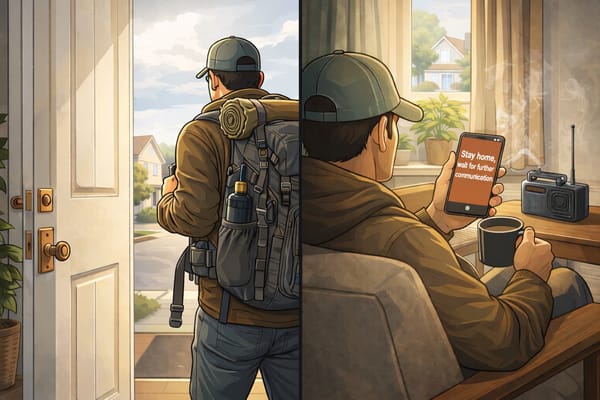
Once you strip away the dramatic scenarios, most emergencies end the same way: you stay home and wait.
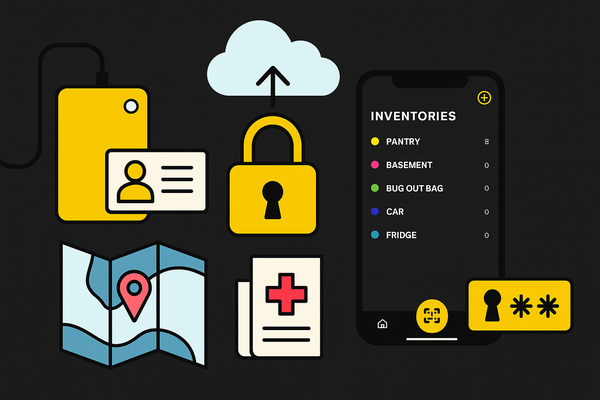
That makes the question less about evacuation routes and more about what everyday life looks like when things are disrupted. When you’re bugged in, preparedness is no longer theoretical. It shows up when you open your cupboards, plan meals, and decide how long you can remain comfortable without resupply.
This is why a realistic pantry matters more than most other preparations.
If you want to think through this in practical terms, see How to build a realistic pantry inventory.