How to Build a Realistic Pantry Inventory (Without Buying 200 Cans of Tuna)

Most people fall into three camps:
- panic buyers (hi, Covid 👀)
- people who keep exactly three noodles and a questionable lemon.
- people that have food for 10 years and enough MREs for the whole neighborhood (a.k.a Preppers)
There is a middle ground, and it is called a working or rotating pantry. The idea is simple: stock what you eat, eat what you stock, and have enough food to ride out short emergencies without stress.
Why build it?

The goal is not to prepare for the end of the world, but to have food on hand when everyday life gets disrupted. This could be snowstorms, earthquakes, or power outages. You don’t know how long it will take before you can get back to a store, and a pantry gives you breathing room.
There is also a financial benefit. Buying in bulk, or simply picking up extra when prices are low, means you pay less over time. You also shop less often, which cuts down on impulse purchases. A working pantry ends up saving money while giving you security.
Start with what you eat

The easiest place to begin is by looking at what you already eat. Track your groceries for a couple of weeks or make a rough list of your usual meals. There’s no need to calculate exact grams of rice per week, it is just to get the big picture and know how many meals use what staples.
When you shop, buy one extra package of shelf-stable items you normally buy, like pasta, rice, or beans. Avoid the temptation to buy 100 cans at once. Over time, those extras add up, and after a month or two you will have a week’s worth of food without really noticing. If you keep going, you can easily build up to a pantry that lasts 2–3 months.
How to stay organized

The challenge with larger pantries is avoiding waste. Food expires if you don’t rotate it properly. The two basic rules are:
- Store new groceries behind older ones so you use up what expires first.
- Keep a list of what you have and their expiration dates.
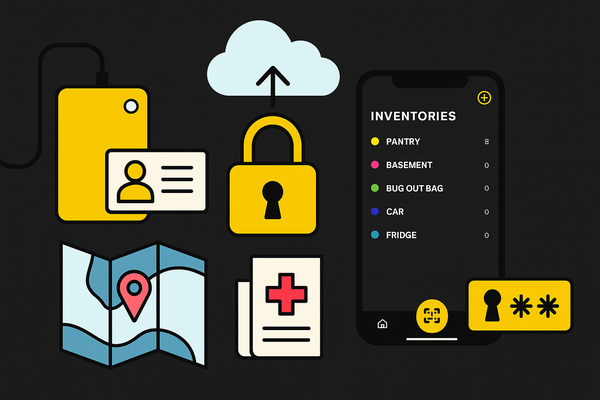
This can be done on paper, in a spreadsheet, or with an app like Apocalists that warns you before items expire and helps you track multiple inventories in one place. For example, you can set the fridge inventory to give a reminder three days before expiry and the pantry inventory to warn you one month in advance.
What about fresh food?
Some people say they only eat fresh food and don’t want canned or processed items. For short disruptions of up to a week, this is possible. Many fresh foods last longer than expected: carrots, potatoes, cabbage, and eggs can all keep more than a week. For longer disruptions you will need shelf-stable options, or you can preserve your own food by canning, freezing, or fermenting what you like (This could be topic for another post).
Final thoughts
Once you get into the rhythm of building and rotating a pantry, it stops feeling like “prepping” and just becomes part of how you shop and cook. You waste less food because you actually use what you buy, and you save money by stocking up when prices are low instead of paying whatever the store is charging that week. It also cuts down on those extra car trips where a bag of pasta turns into a $50 checkout.
A pantry isn’t about fear, it’s about being practical. It’s a small investment of planning that pays you back in peace of mind, fewer emergencies, and a little extra left in your wallet.
It’s not hoarding if it’s organized.
TLDR (Too Long Didnt Read)

Steps
- Decide on a goal: 1 week, 2 weeks, or more.
- Make a list of the staples you already eat.
- Each time you shop, buy one extra shelf-stable item.
- Rotate older food to the front, newer food to the back.
- Track expiration dates so nothing goes to waste.
Subscribe to get the Pantry Planner

Want to make this easier? I’ve put together a Pantry Planner in Excel that calculates how much food you need based on your family size, days, and meals per week. It shows the totals in both kilograms and pounds, and also gives you the calories per week so you know you’re covered.
Apocalists is the tool that helps you track your pantry inventory day to day. The Excel sheet is a great starting point, and in the future you’ll be able to import it directly into Apocalists so the process becomes even more automated.
Subscribe below and you will have access to the planner on this post. You’ll get a tool that helps create that first emergency list, and which then grows into the stable rotating pantry. This way you can waste less food, and save money while building a pantry that actually works.
Stay stocked, stay sane.
How to use the Pantry Planner Excel
- In the Inputs sheet, enter days planned, meals per day, number of people, and unit system (Metric or US).
- In the Planner sheet, for each food item, add how many meals per week it appears in your diet.
- The sheet calculates totals in kilograms, pounds, and calories so you know how much to buy.
- This is a very rudimentary excel i've built by starting to check what I have and what i need to eat for at least 14 days. We eat a lot of asian (specifically Thai) food, and therefore we always have at least 20-30Kg of rice. The excel just tracks the bare minimum required for an emergency.